



Nigeria
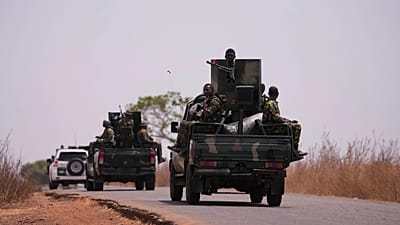
The United States said on Tuesday that it had delivered “critical military supplies” to Nigeria after carrying out strikes on Christmas Day targeting militants in the country’s unstable northwest.
This delivery is the latest sign of strengthening security cooperation between Washington and Abuja, and comes as Nigeria’s national security adviser signed an agreement worth $750,000 per month with an American firm to lobby the administration of President Donald Trump.
On the evening of December 25, the U.S. struck sites in Sokoto State in what Nigeria described as a “joint” operation against targets linked to the Islamic State group.
“This delivery supports Nigeria’s ongoing operations and underscores our shared security partnership,” said the U.S. Africa Command (USAFRICOM) on X, without providing further details.
The December bombings marked a turnaround after relations collapsed late last year when Trump described violence in Nigeria as “persecution” and “genocide” against Christians.
The Nigerian government and independent analysts reject this characterization, which has long been used by the American and European religious right.
Africa’s most populous country, roughly divided between a predominantly Muslim north and a predominantly Christian south, faces multiple, sometimes overlapping armed conflicts, including a jihadist insurgency that has been ongoing since 2009.
Southeast separatists, who have long maintained a lobbying presence in Washington, have also used the “Christian genocide” narrative.
Lobbying Effort
According to newly filed disclosure forms submitted to the U.S. Department of Justice and consulted by AFP on Tuesday, Abuja has also entered the lobbying arena.
Security chief Nuhu Ribadu hired the American lobbying firm DCI Group in mid-December to help Abuja communicate about “its actions to protect Christian communities and maintain U.S. support in the fight against West African jihadist groups and other destabilizing elements.”
A few days before the U.S. strikes, Nigeria’s information minister said that the “dispute” with Washington had been resolved, “resulting in a strengthened partnership between America and Nigeria.”
Last week, a Nigerian source familiar with post-strike security arrangements told AFP that the Nigerian Air Force would lead future strikes, with the United States providing intelligence from reconnaissance flights.
Abuja remains open to future U.S. strikes, the source added.
While these strikes represented an improvement over Trump’s earlier threats of unilateral military intervention, they caused embarrassment in Abuja when the U.S. president claimed full credit.
Adding to uncertainty in Nigeria–U.S. relations, Trump recently told the New York Times: “I would like this to be a one-time strike. But if they keep killing Christians, it will be a repeated strike.”
Nigeria is still classified as a “country of particular concern,” a U.S. State Department designation relating to alleged violations of religious freedom.
The Nigerian government has said the strikes targeted Islamic State fighters, members of the jihadist group Lakurawa, and “bandit” gangs, but the number of casualties and their affiliations remain unclear.
However, local and international journalists were only able to confirm damage to farmland and civilian buildings, as well as injuries among the civilian population.

01:06
Russian Foreign Minister Sergey Lavrov condemns US operation in Venezuela
02:12
Legendary boxer Muhammad Ali to be honoured with US postage stamp
01:18
Cuba faces growing pressure from the United States after Maduro capture
01:14
Alliance of Sahel States condemns United States operation in Venezuela
01:04
Protests erupt in Minneapolis after ICE officer kills woman during immigration crackdown
01:45
Greenlanders voice concern as US renews push to acquire Arctic island